Belarus: Xya Hom Qos Tshiab Nyob Ze Rau Kev Sau Npe Hauv Xeev
Tus yuam sij takeaways
- 7 new potato varieties are now in state registration
- 10 to 15 years are needed to breed one potato variety
- 145 varieties created by the Belarusian centre in 95 years
- 43% of the planned potato area harvested by 25 September
Vim li cas nws tseem ceeb
- Rau cov neeg ua liaj ua teb
- Ask the breeding centre for trial data on the seven new varieties before registration ends, and plan small test plots for 2027.
- Rau cov tub luam
- Monitor harvest progress in Mogilev, Minsk and Brest, which supplied most of the 317,000 tonnes collected so far.
- Rau cov neeg muag khoom
- Seed multipliers should prepare for demand for new domestic varieties once they enter the state register.
Kev piav qhia luv luv 60 vib nas this
Belarusian breeders are close to adding seven home-grown potato varieties to the national register: Feniks, Nesterka, Veles, Optimum, Vaildberriz, Likhtar and Asilak. They come from the potato research centre of the National Academy of Sciences, which has released more than 145 varieties over 95 years. Each variety needs 10 to 15 years of selection, starting from over 120,000 seeds, and is tested in five regions. The news arrives mid-harvest: by 25 September farms had lifted 43 percent of the planned area and 317,000 tonnes, at 33.8 tonnes per hectare on average. Seed growers and farms in Belarus and Russia gain more local options as import substitution continues. Traits such as disease resistance, yield and intended use of the new varieties were not disclosed, and registration is not yet complete, so their commercial value on farms still remains to be proven in practice.
Potato breeders in Belarus are completing seven new varieties. The varieties are now going through the state registration process.
The work is led by the Scientific and Practical Centre for Potato and Horticulture of the National Academy of Sciences of Belarus. Pravda.ru reported the news, and the Russian Potato Union republished it on 24 September.
The seven varieties are: Feniks, Nesterka, Veles, Optimum, Vaildberriz, Likhtar and Asilak.
Hnub ua haujlwm. Tshem tawm kev sau npe hauv ib qho nias.
A long breeding path
Yulia Gunko heads the potato breeding department at the centre. She said the path of one variety takes 10 to 15 years.
Breeders start with more than 120,000 seeds for each breeding programme. Candidates are then tested in five regions through the network of institutes and stations.
The centre has created more than 145 varieties in 95 years of work. Each new variety must show stable results over several seasons before it can enter the register.
The names of the new varieties were published, but their main traits were not. Details on yield, disease resistance and use type are expected with the official register entries.
For cooking use, the optimal starch content is 15-18%, according to the centre. For storage, it recommends +4 to +6°C, darkness and 85-95% humidity.
Kev nce qib ntawm kev sau qoob loo
The new varieties come as the 2026 harvest continues. By 25 September, Belarusian farms had harvested potatoes from 43% of the planned area. The data come from the Ministry of Agriculture and Food, as reported by BelTA.
Farms had collected 317,000 tonnes. The average yield was 338 centners per hectare, or 33.8 tonnes per hectare.
Mogilev region led with 86,000 tonnes. Minsk region followed with 77,000 tonnes and Brest region with 66,000 tonnes.
Vim li cas nws tseem ceeb
Belarus is one of the main potato producers in the region and a supplier of seed and ware potatoes to Russia. Domestic breeding reduces dependence on Western varieties and seed. Seven new varieties at once is a significant addition to the national list. The real test will be yield and storage performance on commercial farms after registration.
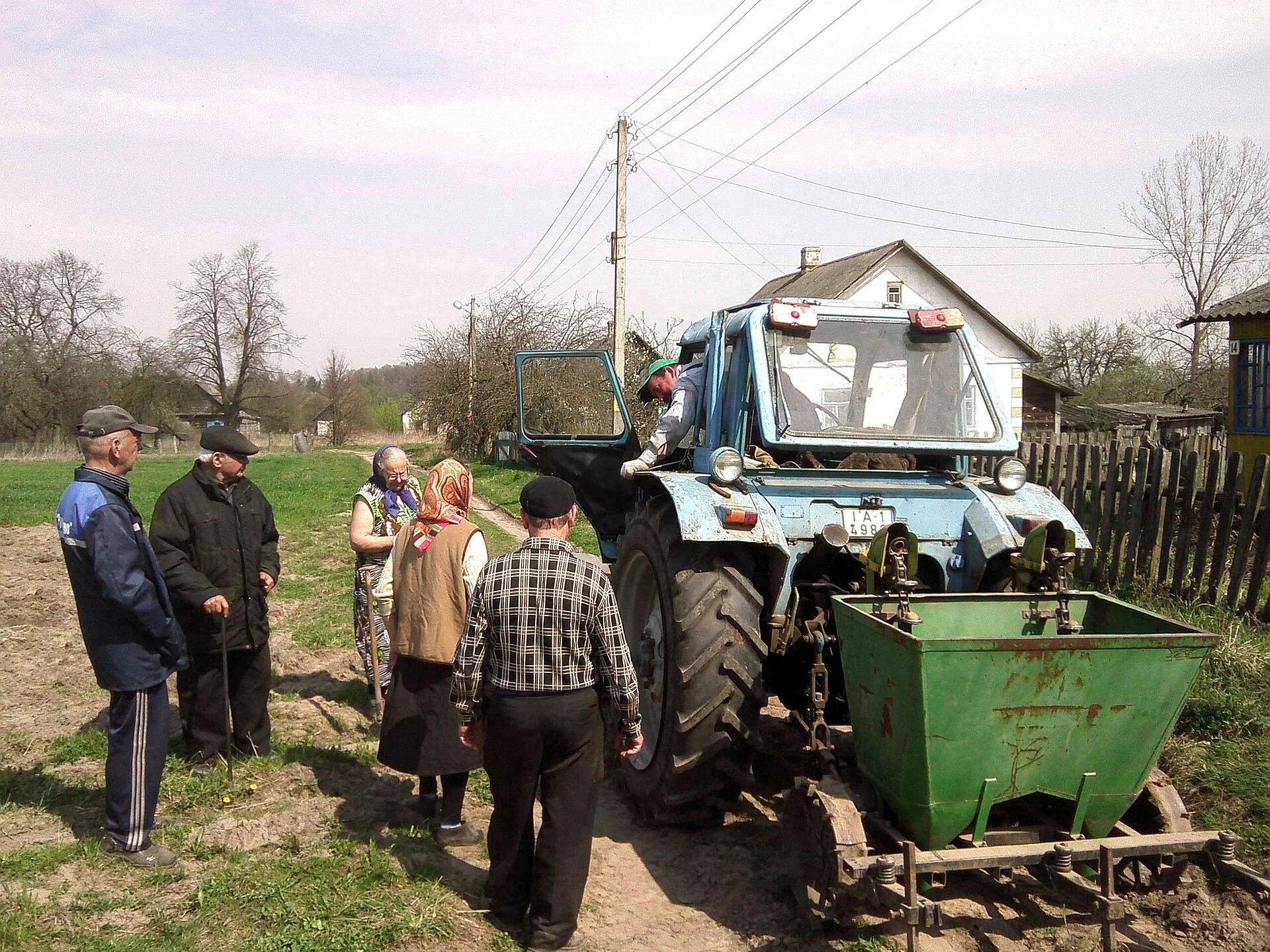
Photo: A potato planter in the village of Klepachi, Belarus (illustrative). Викиникос / Wikimedia Commons, CC LOS-SA 4.0
Kev Qhia Txog Qos Yaj Ywm Thoob Ntiaj Teb
Tsib zaj dab neeg zoo tshaj plaws, cov nqi, cov lus ceeb toom txog kab mob thiab cov xwm txheej. Sawv ntxov hnub ua haujlwm, tsis muaj kev tshaj tawm.
Dab tsi tom ntej
The seven varieties are going through the state registration process. The potato harvest in Belarus continues.
Qhov chaw
- Картофельный союз (Pravda.ru), 24.09.2026 — https://welikepotato.ru/v-belarusi-zavershaetsya-razrabotka-semi-novyh-sortov-kartofelya-2/
- BelTA (Минсельхозпрод), 25.09.2026 — https://belta.by/economics/view/kartofel-v-belarusi-ubrali-s-43-zaplanirovannyh-ploschadej-802761-2026/
- ОДИН ИСТОЧНИК
Txuas nrog cov ntaub ntawv no
- Lub teb chaws
- Belarus
- tuam txhab uas muag
- Scientific and Practical Centre for Potato and Horticulture of NAS of Belarus
- Tshuab
- kev cog qos yaj ywm
Lwm yam dab neeg
Tebchaws Europe: EU_36 Cov Kab Mob Uas Ua Rau Mob Poob Mus Rau 34% Ntawm Cov Qauv Uas Tiv Thaiv Tau EU_43 Nce Mus Rau 12%
Hungary: Thaj Chaw Qos Yaj Ywm Poob Mus Txog Li 5,065 ha, Ib Feem Kaum ntawm Xyoo 1990 Qib