Argentina: Patagonian Wholesale Market Txhawb Nqa Cov Qos Yaj Ywm Hauv Zos Kom Txo Cov Nqi Thauj Khoom
Tus yuam sij takeaways
- 5 origins supply potatoes to the Río Gallegos market
- 100% stall fee discount is offered to Santa Cruz growers
- 25,000 pesos buys a 5 kg pack of fresh-cut local potatoes
- 7 to 9 days of shelf life for the product in a fridge
Vim li cas nws tseem ceeb
- Rau cov neeg ua liaj ua teb
- Growers in Santa Cruz can test demand at no stall cost: the Río Gallegos market gives local producers a 100% fee discount.
- Rau cov processors
- Consider fresh-cut formats for remote markets: a 5 kg pack sells for ARS 25,000 and keeps 7–9 days chilled.
Kev piav qhia luv luv 60 vib nas this
A wholesale market in the far south of Argentina wants more potatoes grown close to home. The Patagonian Central Market in Río Gallegos still relies on supply from Buenos Aires, Entre Ríos, Corrientes, Mendoza and Río Colorado, and freight weighs heavily on what Santa Cruz consumers pay. To change that, local producers get stalls with a full fee discount. One regional business goes further: it grows potatoes in the province and cuts them at a plant in El Calafate into sticks, lattice and cubes. A five kilo pack costs 25,000 pesos and lasts seven to nine days in a home fridge. For growers in Patagonia the market offers a low-cost way to test demand; for processors it shows a niche for fresh-cut formats in remote regions. The report, republished by Argenpapa, gives no figures on local area or volumes, so the scale of this shift is still unclear.
A wholesale market in southern Patagonia is promoting potatoes grown in Santa Cruz province. The Patagonian Central Market (Mercado Concentrador Patagónico) operates in Río Gallegos. It wants to shorten the supply chain and lower prices.
The regional newspaper La Opinión Austral reported on the market. The Argenpapa portal republished the report on 13 September.
Potatoes from far away
Most potatoes still travel long distances. The market receives produce from Buenos Aires, Entre Ríos, Corrientes, Mendoza and Río Colorado. One trader offers five potato varieties at a single stall.
Hnub ua haujlwm. Tshem tawm kev sau npe hauv ib qho nias.
Distance has a strong effect on prices in Santa Cruz. Local production aims to reduce transport costs from other provinces, the report said.
The market combines wholesale and retail sales. It links producers, traders and consumers directly. To support local growers, the market gives them stalls with a 100% fee discount. Recent promotions created strong sales and required faster restocking, said Eugenio Grela, the commercial director.
A local fresh-cut product
One local business grows potatoes in Santa Cruz. It also runs a processing plant in El Calafate. The plant sells fresh-cut potatoes in three shapes: sticks, lattice and cubes.
The product keeps for seven to nine days in a normal fridge. Buyers can also freeze it later. A 5 kg pack sells for ARS 25,000, or ARS 5,000 per kg.
This price is for a peeled and cut product. It is not comparable with raw potatoes sold in bags in Buenos Aires.
Vim li cas nws tseem ceeb
Patagonia depends on potatoes trucked from the north. Freight adds a large share to the final price. Local production and fresh-cut processing can keep more value in the region.
The model is still small. The report gives no figures on local area or volumes. But free stalls and direct sales give local growers a way to test demand before they invest more.
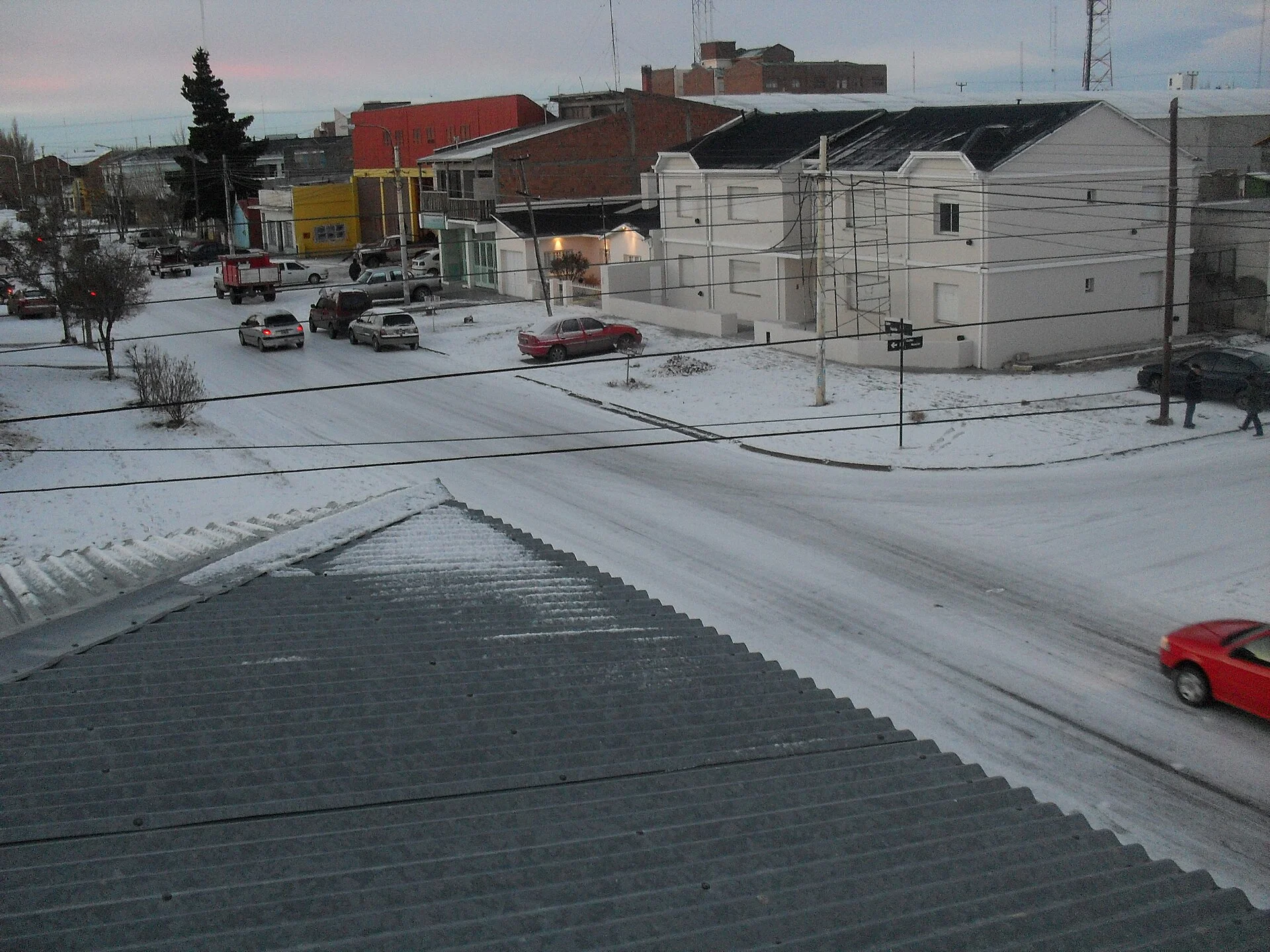
Photo: Río Gallegos, Santa Cruz province, Patagonia, Argentina (illustrative). Tractoramolida / Wikimedia Commons, CC LOS-SA 3.0
Kev Qhia Txog Qos Yaj Ywm Thoob Ntiaj Teb
Tsib zaj dab neeg zoo tshaj plaws, cov nqi, cov lus ceeb toom txog kab mob thiab cov xwm txheej. Sawv ntxov hnub ua haujlwm, tsis muaj kev tshaj tawm.
Dab tsi tom ntej
The market plans to keep growing its volume and public use. The report does not give local area or output. It is not yet clear whether local supply can replace a large part of the potatoes trucked from the north.
Qhov chaw
- La Opinión Austral (via Argenpapa) — Mercado Concentrador Patagónico, Río Gallegos — https://laopinionaustral.com.ar/
- Argenpapa — Argentina (Santa Cruz): El Mercado Concentrador Patagónico impulsa la papa local (13/09/2026) — https://www.argenpapa.com.ar/noticia/17715-argentina-santa-cruz-el-mercado-concentrador-patagonico-impulsa-la-papa-local-y-busca-reducir-costos
- ОДИН ИСТОЧНИК
Txuas nrog cov ntaub ntawv no
- Lub teb chaws
- Argentina
- tuam txhab uas muag
- Mercado Concentrador Patagónico
- Tshuab
- fresh-cut potato processing
Lwm yam dab neeg
USA: Processors Used 286 Million cwt of Potatoes in 2025, Up 5%
USA: Value of 2025 Potato Crop Falls 9% to $4.21 Billion