Lavxias Tso Tseg Kwv Yees Li RUB 4 Billion Rau Xyoo 2027 Kev Pab Nyiaj Rau Cov Noob Uas Yug Hauv Tebchaws, Tab Sis Qos Yaj Ywm Tsis Tau Muab Lub Npe
Russia's draft 2027 budget sets aside about RUB 4 billion to reimburse farmers for seed of domestic breeding. Reports so far do not name potato, where domestic varieties hold only 8–10% of area.
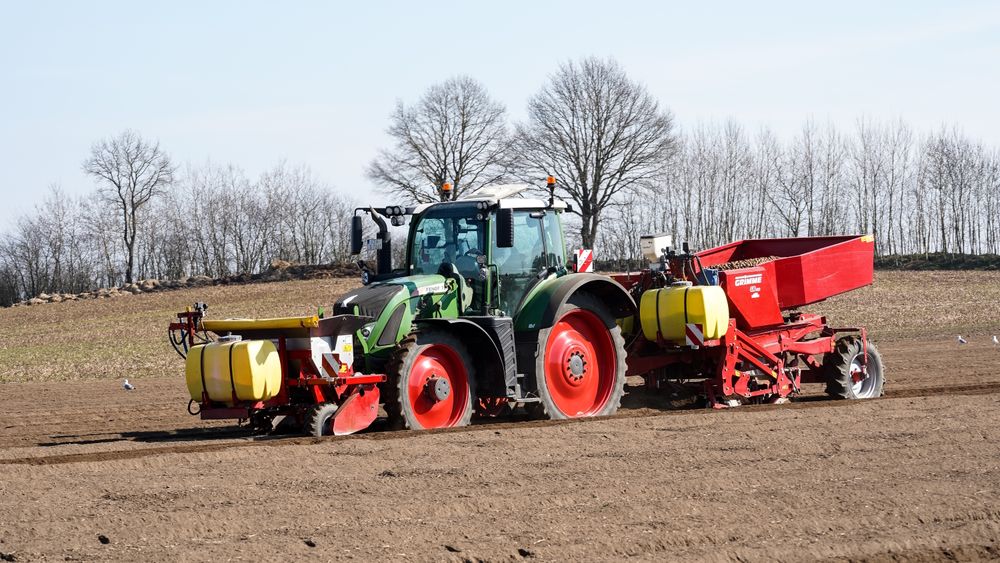
Russia’s government has widened farm support to cover part of the cost of buying and sowing seed of domestic breeding, with about RUB 4 billion set aside in the draft federal budget for 2027. The new rules take effect on 1 January 2027. None of the reports published so far names potato among the eligible crops, so growers will need the detailed rules before they can plan around the measure.
What the government announced
Prime Minister Mikhail Mishustin announced the change on 2 November at a meeting with his deputy prime ministers. According to Interfax, he signed a resolution amending the state programme for agricultural development. Regions will be able to use federal money to reimburse farmers for seed they have bought.
Until now, this type of support went only to elite seed production. Vedomosti and Agroinvestor report that the widened support is aimed at participants in comprehensive scientific and technological projects in agriculture, of which more than 50 are under way. Interfax and other outlets describe the regional reimbursement more broadly, so the exact circle of recipients should be checked against the resolution itself.
Hnub ua haujlwm. Tshem tawm kev sau npe hauv ib qho nias.
The RUB 4 billion figure comes from the draft budget, not from an adopted budget. The published reports give no subsidy rates, co-financing shares, application rules or crop list.
The 75% target behind the measure
The subsidy follows a slowing trend. Agroinvestor cites these shares for seed of domestic breeding across crops: 62.5% in 2023, 67.6% in 2024 and 69.3% in 2025. Mishustin said the figure had come close to 70% this year. The Food Security Doctrine and a task set by President Vladimir Putin call for at least 75% by 2030.
Agriculture Minister Oksana Lut said in August, at the Russian Field forum, that growth in the share of domestic seed was slowing and reaching a plateau, according to Agroinvestor. The same publication recalls a column by Kristina Romanovskaya, general director of the Lazarevskoye agricultural holding, who argued that farmers look first at yield, cost and profit rather than at a seed’s origin, and that the grower currently pays for the performance gap.
Where potato stands
The national percentages above do not describe potato, which is far further behind. As Potatoes.News reported in September, domestic varieties account for only 8–10% of Russian potato area, and about 90% of the varieties used rest on imported genetics, mainly Dutch and German, even when seed is multiplied inside Russia.
This distinction matters for the new subsidy. It is defined by the origin of the breeding, not by where the seed was produced. If potato is covered, seed of a foreign variety multiplied in Russia may not qualify, though the published reports do not address that case directly.
Some regions already go further. The September report noted that Chelyabinsk Oblast offers increased subsidies of up to 100% of the cost of using Russian-bred varieties. Regional seed strategies also differ, as the experience of Novgorod Oblast qhia tau hais tias.
Qhov no txhais li cas rau cov liaj teb
- Do not budget on it yet. Until the crop list and rates are published, treat the subsidy as a possibility for the 2027 planting, not as income. Regional agriculture departments are the place to ask.
- Check the variety’s origin. Growers already planning trials of Russian-bred varieties should keep purchase and sowing records, because reimbursement schemes usually require documents. The exact requirements are not yet known.
- Judge varieties on the field. A subsidy changes the price of seed, not the yield, storability or market acceptance of the crop. Compare any variety switch with your own contracts and buyers, and agree it with your agronomist.
Qhov chaw: Interfax, 2 November 2026; Agroinvestor, 2 November 2026; Vedomosti, 2 November 2026.